Everything Is Performative
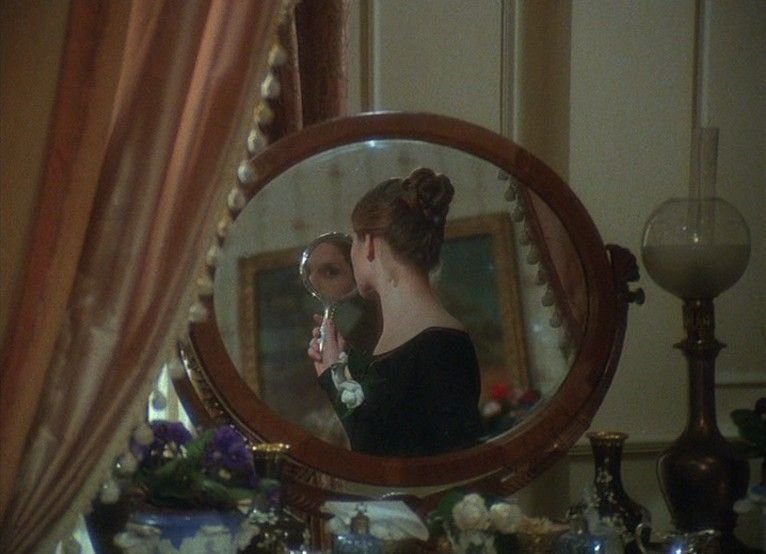
I first confronted the idea that everything may be a performance of the self when I began to journal with the intention that someone else may read it. A private practice soon became an experimental one, with the focus being on an audience rather than myself. This is not an unknown phenomenon. Many famous writers have had excerpts from their diaries and journals published. Joan Didion, Anais Nin, Virginia Woolf, and Sylvia Plath. Posthumous publication and the ethical dilemma surrounding it, are relevant especially in today's time.
In April 2025, Joan Didion’s private journal entries were published in an accumulated book titled Notes to John. Featured in the book was an intimate documentation of therapy notes about her marriage, troubles with her daughter, and her overall mental health. Due to the lack of any kind of instruction for the entries, they were published under controversial circumstances. In an article by The Guardian, Donna Ferguson says: “On an ethical and emotional level, however, he personally found the decision to publish Notes to John ‘disturbing’: ‘I don’t feel comfortable with anyone’s private journals being published this early.’ Although there has been ‘public interest’ in posthumously publishing the journal of a great writer many years after their death, he thinks that, even in these circumstances, therapy should be protected. ‘That’s my position. But I do think it’s debatable.’” While her notes are described as being found “neatly organised” on her desk, some have taken this notion as an indicator that they were written with an intention of being published. Whether that was a subconscious intent or not, it is still difficult to separate what was written for self-preservation versus what may have been written for posterity.
I had mulled over this concept in my head as I myself would indulge in my journaling practice. Finding myself pausing longer, being stumped on a sentence that could have been worded better. I realised then that a private ritual that I had always used as an outlet may be an underlying signal of authenticity as a performance. I still journal just for myself, and I believe it to be a meditative practice, just for myself. However, I believe there are parts of my writing that I frame, subconsciously or not, with a reader in mind.
By including social media in the equation, every act of photo and video taking can be demonstrated as an act of constructed identity on display. Curating and organizing the contents of one’s life for public perception is a symptom of a deeply audience-driven age. My own internal battle between wanting a public life — to be seen for my creative vision, work, and ideas — and my need for privacy, seclusion, and rest from the online frenzy of social media and the pressure of being constantly ‘in the know’ often feels at odds. I regularly tend to question how one can creatively thrive in this day and age without the presence of social media. Are the two ideas interconnected, or is this another fallacy we as a society have forced upon ourselves for the sake of a visibility that may not even translate to meaningful creative fulfillment? While social media has always functioned as a platform for exhibiting an idealised persona, I believe performativity now extends beyond the screen and into the physical world more than ever.
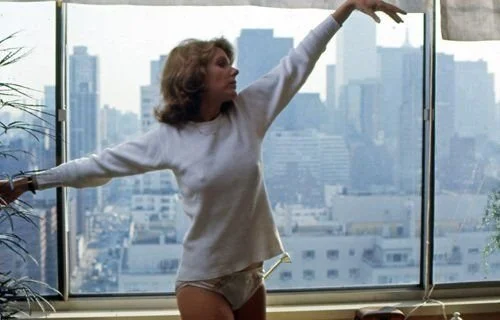
An Unmarried Woman (1978)
There is a trending archetype of the 'performative male’ who has a visible appearance of someone who reads feminist literature, carries around a tote bag, 'isn't toxic’, and drinks matcha. On the surface, this persona can read as an attempt to appeal to the female gaze. Which is an interesting inversion when placed alongside the extensive history of women shaping their personas to appeal to the male gaze. Let me be clear, I find no interest in judgment towards people who do have these genuine interests. What feels most important to me is questioning the sincerity behind these cultivated personas. If these interests are all just an act, how can people expect to make genuine connections with others? There is a certain pressure around ‘fitting into an aesthetic.” It’s as if everyone believes they must fit into a socially constructed template or else they are undefinable to themselves. Even in claiming authenticity, we are often still performing.
Social psychologist Erving Goffman describes this phenomenon quite distinctly in his theory of performance as it was detailed in his book, The Presentation of Self in Everyday Life. His findings explained that, similar to a play, social interactions serve as a theatrical performance for the audience observing them. In Goffman’s Dramaturgical Approach he breaks down the psychological components as they would function in a live performance; front stage, backstage, and Impression Management. In front stage, the actors are aware of the audience before them and thus cater themselves to appease their preconceived expectations of that role. In contrast, the back stage is a side to the actors that is more authentic to themselves, and less of a role-play. Impression management is the internal effort to shape how others perceive you by controlling what you reveal of yourself and thus constructing the image you want to project. In relation to social media, our front stage performances are evident; the perfectly curated Instagram stories and photo dumps. Our backstage moments are becoming less genuine, now mediated by the possibility of any kind of exposure.
Perhaps, performativity isn’t inherently negative or a flaw necessarily, but simply an outcome of a way of life that has become normalised. It has evidently existed in many forms, with the confirmation of journal entries and self-recorded data that have
been celebrated and praised for their relatability and vulnerability. While I believe that everything is arguably a performative act nowadays, I feel more strongly that we are trading authenticity for temporary satisfaction and validation. The thought that performativity might prevent me from forming genuine connections terrifies me far more than the idea of not living up to imagined standards.
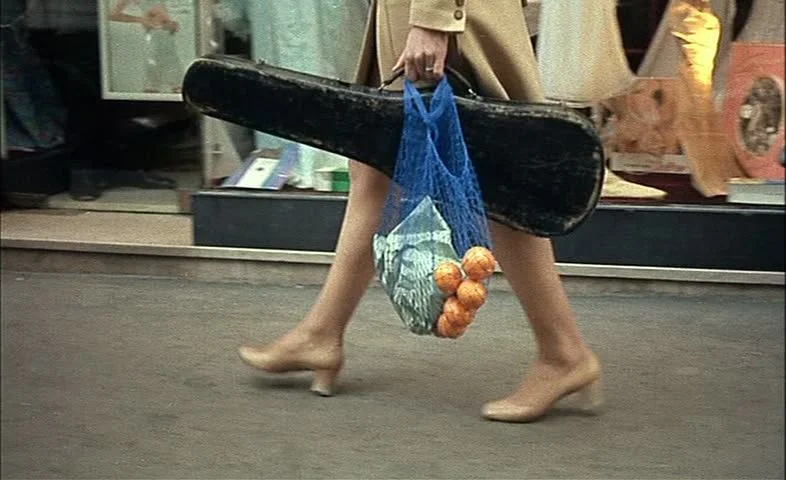
Bed & Board (1970)
Publication in mind: The Gentlewoman
