Kervin Marc Designs for The Thinking Person
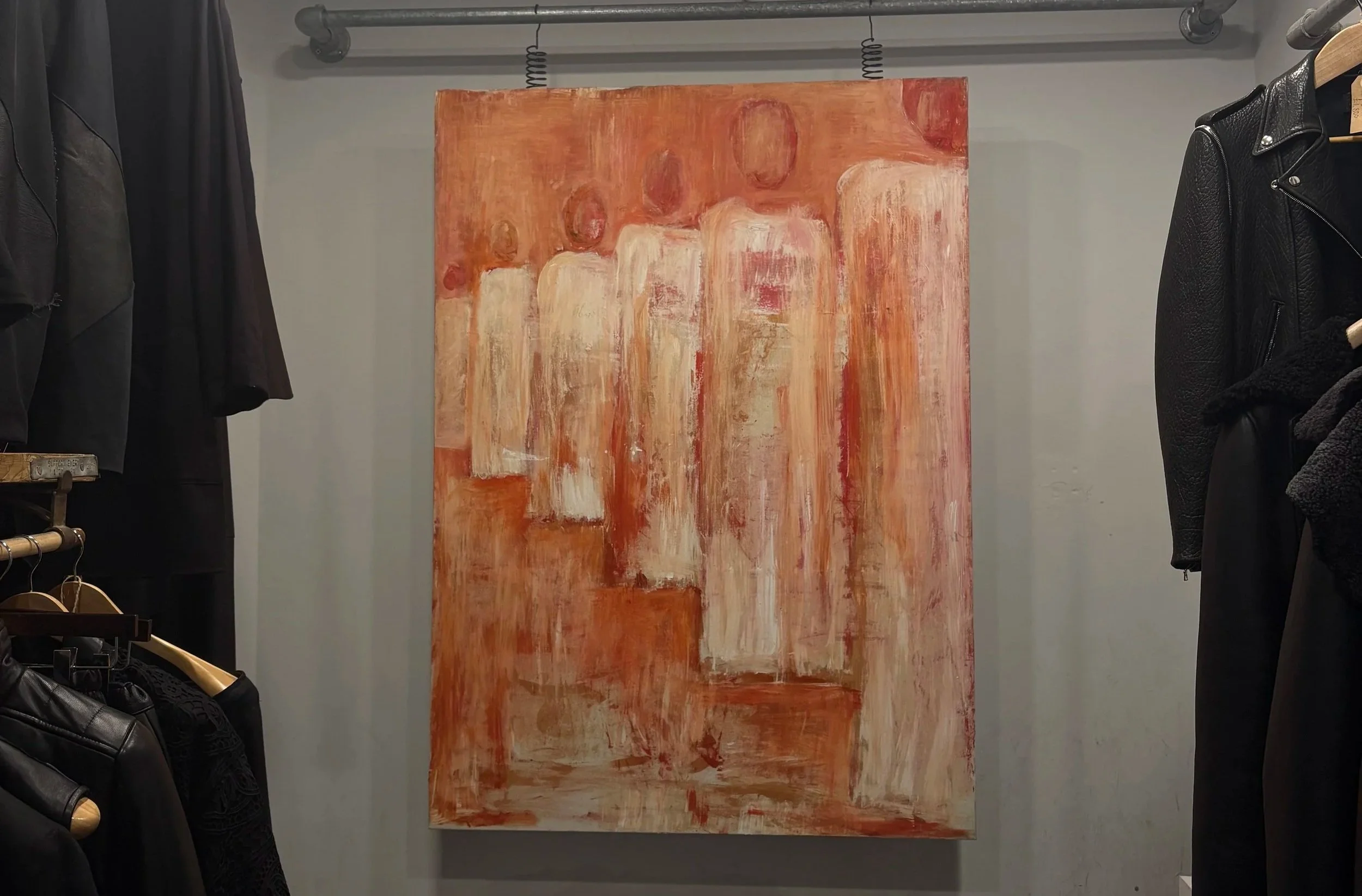
Stepping inside Kervin Marc in Notting Hill doesn’t feel like entering just any other store on Westbourne Grove. It feels like being immersed in a creative process shaped by both passion and discipline. Part art gallery, part clothing store, Marc also considers it his studio. The space functions as somewhere visitors can browse his work, but also where he actively creates it. A blank canvas sitting in the window will soon be filled with Marc’s innovation — an indicator that the space is constantly evolving. The larger layout allows him to expand this vision, as he explains: “The advantage of West London and Notting Hill is that I'm in a bigger space and I can actually exhibit more of my artwork and really tell my story in a little bit more detailed way.”
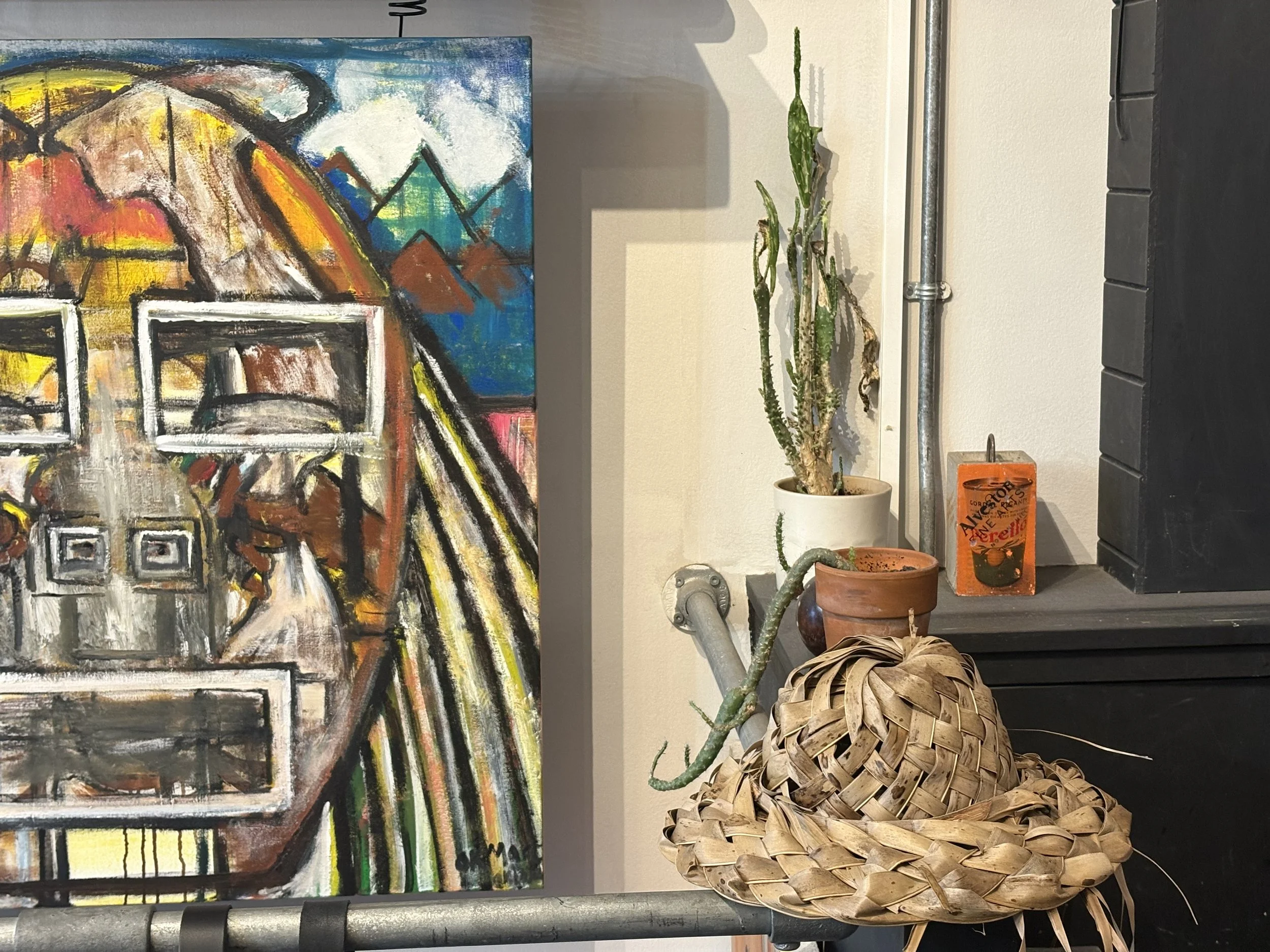
Colourful artwork is placed strategically around an assortment of utilitarian-style clothing — leather jackets, hats, and bags. I observed the process in action as Marc thoughtfully reorganised and curated his pieces around the store. The entirety of the space felt like a moving piece of art, everything sifting together with purpose and intention.
Marc’s intent wasn’t to become a fashion designer. That came later. Marc briefly had a career as a professional cricket player before studying industrial product design at Central Saint Martins College of Art. After running a market stall in East London for 18 years, Marc notes the transition from curating a stall at Spitalfields market to owning a boutique in Notting Hill reminds him what excites him about both: “I'm still addicted to the interaction of people and the immediate feedback, either to what I'm wearing, or what I've just created, or you know it's in my DNA.” Marc initially wanted to be an artist, but pivoted into fashion design with the intent to move towards a more financially viable career. From a young age, he had a passion for deconstructing clothing and upcycling them into repurposed designs, specifically military garments.
Sustainability is a buzzword right now, but Marc has been reconstructing and upcycling pieces since he was a teenager. Marc’s purpose for creating anew from the old was purely for practicality: “I wasn't trying to save the planet or anything like that. This is just what I was doing. I've been hearing the word sustainability, sustainable fashion. I didn't even know when I started, like 30 years ago, I didn't even know this word. But now I hear it. When I was at my stall, the art colleges would send students to come and see me as an example of a sustainable designer.” Nowadays, the trend of sustainability takes form as a way for consumers to make a conscious effort to be less wasteful and kinder to the environment, whether for aesthetic choices or a genuine moral compass. For this self-motivated individual, this method was simply a way of living that both sustained and fascinated him. He reflects: “Firstly, when I was going to art college at Saint Martins, I really had no money, and we're talking early 90s, the cheapest clothes that you can wear, which were functional, warm, or strong. That was military clothing and then also vintage clothing. In my era of going to art college, that's what I would do.” What was once designed out of necessity has become Marc’s signature style.
“It doesn't matter who's in front of you, whether it be a small child or a 100-year-old person, they want to be challenged. They want to think and enjoy.”
Marc has built his career on the idea of creating work that challenges the ideas of those who view it. His vision is rooted in intellect as much as it is in aesthetics. The audience that his store attracts he says is: “A thinking person, because the space I have and how I curate my work, it's often next to artwork. And artwork, you've got to think. And the clothing in itself are pieces of art. So the people who come — what I learned in East London is it doesn't matter who's in front of you, whether it be a small child or a 100-year-old person, they want to be challenged. They want to think and enjoy.” In Marc’s view, curiosity and learning isn’t restricted by age, but instead an innate need that continues to grow over time.
Although not extremely far apart in distance, the cultural difference from East to West London was one that Marc recognised. Having acknowledged the challenges of having a boutique that stands out on a street that houses more mainstream clothing stores. In addition, he notes the challenges of being amongst a community of mostly white, conservative people. Marc explains: “The wrestling match of being a black guy, six foot five, black guy with an art gallery, stroke shop, stroke boutique, stroke studio, it’s a lot for some extremely conservative people in Notting Hill. So it can be a bit challenging, but one of the reasons I've taken this path anyway was to be my own artist and designer. Well, I analysed it and I realised people like me — you have to work super hard and come up with something super original— and that's what I'm concentrating on.” Marc’s persistence in remaining original feels less like a strategy and more like a necessity. In a space where he stands out, his work does too.
Marc is no novice to the balancing act between creative work and sales. Understanding that creating art means that it will not cater to all. Marc expresses an introspective awareness of his magnetic energy and his work. As he observes his effect on people: “If I see somebody walking through my door, and they haven't seen me, and then they suddenly lock eyes with me, then walk away I realise, that I am a barrier. They do not want to engage with me for whatever reason. But in the same token, some people will lock eyes with me and walk straight in… What seems to be at times my weakness is at times my strength, or the other way around. What seems to be my strength is seen as my weakness. Sometimes, the things that draw people to me and my type of work are the things that people love. And then those exact things are possibly why some people do not like me or my work.” As noted by the artist himself, the tension between attraction and distance is the reality of making art. It’s a reminder that creative work isn’t meant to please everyone. Its value often lies in the conversations and reflections it provokes.
Publication in mind: Dazed
