The Afterlife of Style
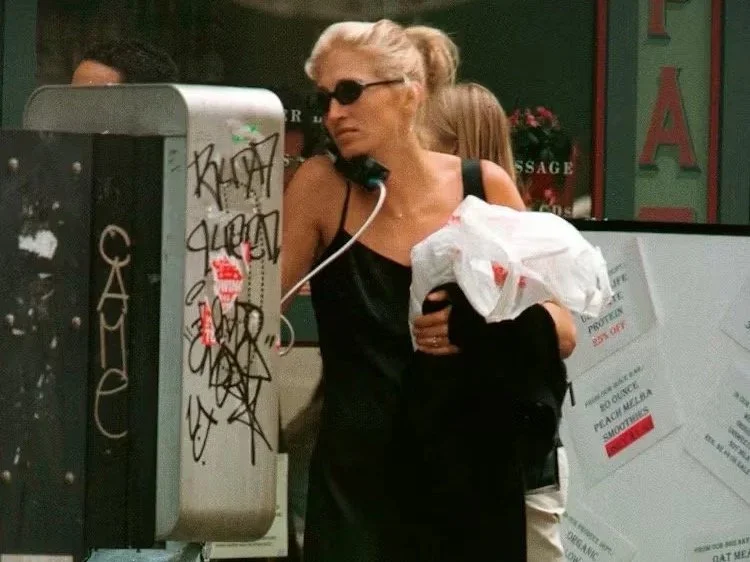
Nostalgia & Cultural Memory
The phenomenon of nostalgia can be explained as the yearning for a period of time that no longer exists. An effort to return to what we experienced or perhaps didn’t experience, but associate with comfort. Most definitions describe nostalgia as a sentimental longing for what no longer exists – having a sad pleasure in remembrance. Accompanying the feeling of nostalgia is the lack of discernment in how good the past really was. Writer Robert Rowland Smith wrote an article for The Times titled “Is nostalgia bad for you” Smith describes the feeling of romanticizing the past by stating: “Let’s not forget that a perfectly accurate memory of our pasts may be an illusion. You could invoke psychoanalysis on this point, which emphasises how much we revise what happened to fit with a theory we hold. But psychoanalysis or not, we all know memory can be unreliable. Better, then, a soothing, unreliable memory than a painful, unreliable one.” (Smith 2012)
In terms of fashion, designers and brands are constantly referencing the past for inspiration, homage, or to play it safe. While some designers embrace collections from the past that reflect life as it used to be, some designers openly reject the idea of nostalgia – which may be an effort to move forward through new and innovative ideas.
Nostalgia In Fashion
If nostalgia romanticises the fashion of the past, then the present sadly misinterprets its original intent. When I mention ‘90s minimalism, the visual language of this aesthetic is instantly recognisable. Levi 517s with a black turtleneck. A crisp white t-shirt that perfectly meets the waist of a pair of trousers. Unstyled hair and simple makeup. Seemingly ‘basic’ clothing that is, at its core, effortless. However, it has become a trend to abide by this look for the sake of buzzwords like ‘timeless,’ ‘elegance,’ and ‘refined.’ Like any other passing trend, ‘quiet luxury’ is losing its flair and taking form into an elevated version of the trend. In a Business of Fashion article, “Why Fashion Is Maxing Out on Minimalism” Pearl and Morris express this change: “Quiet luxury’s moment in the zeitgeist may be over, but the trend left in its wake a thriving market for minimalist, approachably chic clothes with just the right amount of design — a black blazer with a uniquely-cut lapel, say, or a jersey top with an intricately-draped neckline. No brand has capitalised more on that desire than Mary-Kate and Ashley Olsen’s The Row, which last month raised a funding round that valued the brand at over $1 billion.”(Pearl and Morris 2024) Contemporary brands like The Row, Khatie, and Toteme are capitalising on the need for a laid-back outfit that speaks for itself. Something functional but chic. “...wardrobes have relaxed since the pandemic. There’s more of a need for clothes that are ‘responsive to everyday life,’ as Wilkinson Schor said, but still make you look good. The same woman who might have bought a pair of Jimmy Choo stilettos for the office 15 years ago might instead invest in a great cashmere sweater, or a formal-yet-comfortable pair of trousers. The look is relatively timeless, but it will evolve — the width of a pant leg, or how fitted a shirt is. Direction is often informed by the customer.” (Pearl and Morris 2024) This suggests that minimalism continues to evolve – not solely as a revival of the past, but as a modern advancement which considers practicality and aspiration.
The allure of vintage fashion, specifically that of the ‘90s – can be argued to stem from a need for a simplicity that feels absent from society today. A pre-digital era that didn’t run on a ‘need to know basis.’ Instead, you would watch whatever channel was on and listen to whatever station was playing. Information wasn’t easily accessible. If you missed a show, you missed it. Now everything is findable, traceable, made to be streamed, and kept in a digital folder. But back when everyone was offline, inconvenience created meaning and enticement. We are now living in a world where an extension of yourself occupies your back pocket. What was once understated and authentic is now, to some extent, recreated for the sake of a trend, and in some cases, a placeholder for personal style.
The Carolyn Bessette-Kennedy Effect
The most trending person right now is Carolyn Bessette-Kennedy. Although once the internet's best-kept secret for her mystique, class, and elegance embodied, it is now becoming much more mainstream thanks to Ryan Murphy’s new hit mini-series, Love Story. A retelling of the magnetic and tumultuous relationship of JFK Jr. and CBK. In addition to the show’s entertaining storyline and captivating actors, Paul Anthony Kelly and Sarah Pidgeon, the show has also brought along many controversial opinions about the potential disrespect to the late JFK Jr. and Bessette-Kennedy. The more surface-level debate centres around the instantaneous allure to mirror the epitome of minimalism, Calvin Klein’s pieces that began the trend of understatement and simplicity. The opinions are polarised. Some online creators are openly making an effort to imitate looks that they believe ‘would be something Carolyn Bessette would wear.’ Throwing on a black pair of trousers to match a white button-down. A look that would have been considered a staple outfit for a capsule wardrobe, had it no attachment to the now sensational Love Story. While others are observing the attraction to CBK and assume her style is a fad that will soon pass over. When a person, item, or aesthetic archetype becomes wildly popular in such a short span of time, it can just as quickly begin to feel overfamiliar. The same audience who once obsessed over her is now consuming articles with headlines like “death of personal style” or “why you shouldn’t be dressing like CBK.”
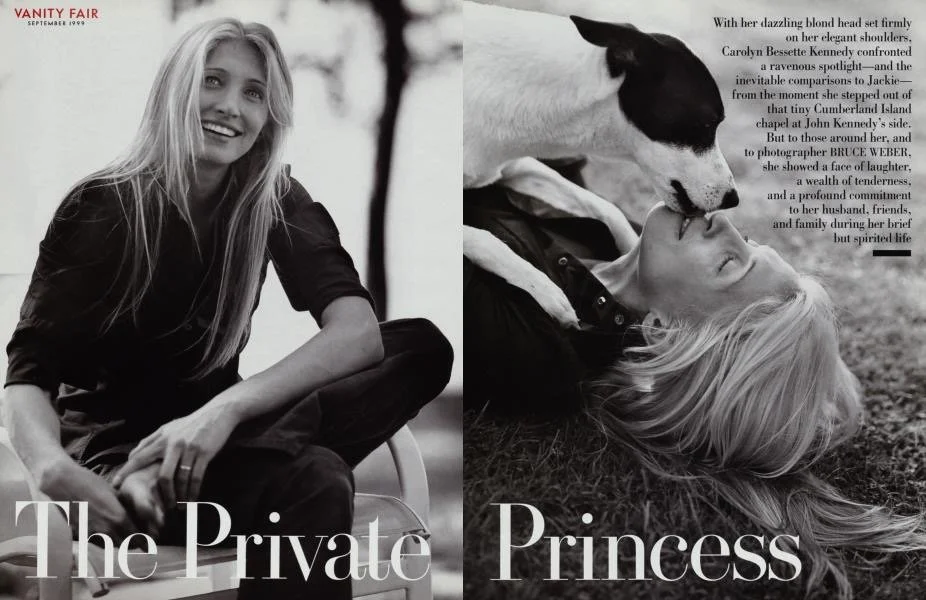
“The Private Princess,” Vanity Fair (September 1999)
The Myth of Making a Style Icon
With Carolyn Bessette-Kennedy at the focal point of the internet's fleeting gaze, it is striking to observe how an individual transforms into a style icon. The process rarely occurs in real time. For Bessette-Kennedy, she was scrutinised and heavily bullied by the press, limiting her title as an icon. Instead, this process unfolds retrospectively, through the curation of images and memories that emerge on our screens, years later. In the case of Carolyn, these paparazzi images have ironically become artifacts of her existence and the impact she made. Walking through the streets of Manhattan alongside America’s prince, JFK Jr, alongside their black-and-white dog, Friday. She was almost always in white or black, featuring her signature brands: Yohji Yamamoto, Calvin Klein, Narciso Rodriguez, and Prada. Occasionally photographed in a long coat with a slip dress underneath, after attending an event. These photos have come to represent an entire era of minimalist dressing. However, through repetition and recreation, these images flatten the complexity of her essence. What is missing is the individual uniqueness. What made Carolyn Bessette's manner of dress so great is that it was very much her own. It was an intangible quality that cannot be bought: her posture, mannerisms, anonymity, and the weight she carried of being married to the former president's son. It is an ephemeral attribute that was singular to her. What remains are fragmented storylines that are tirelessly repeated. Images on moodboards that come with a tagline such as ‘quiet luxury’ and ‘minimalism core.’ There is no backstory to these replications, only surface-level attainability.
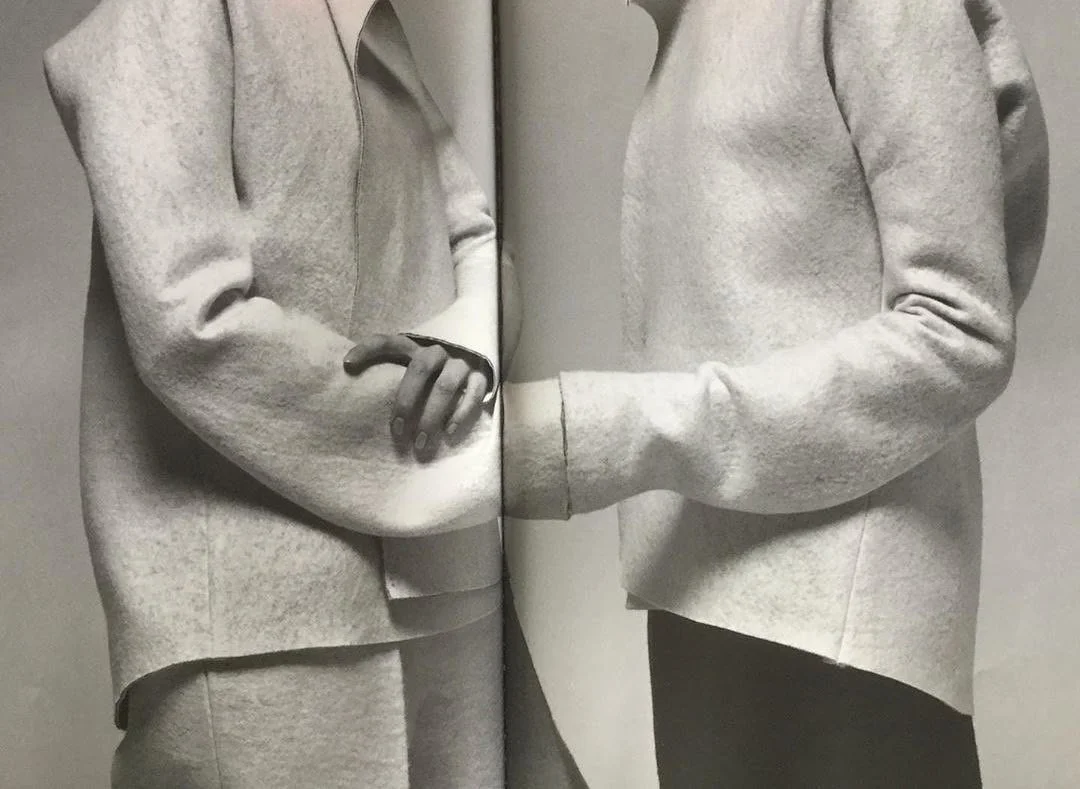
Yohji Yamamoto Spring/Summer 1999
Perhaps it can even be investigated further how many people attempt to emulate the appearance of a public figure and why it tends to fall short of the original. I am a strong believer that while it may be simple to reproduce an outfit, it’s nearly impossible to replicate the aura that radiates from the creator themselves. In an interview with Sarah Pidgeon and Chloe Malle on “The Run-Through with Vogue”, Pidgeon articulates what it was about Carolyn Bessette-Kennedy that was so striking and alluring: “You really see her first… you see her face and her aura immediately, and I think that has to do with the person that she was and her sense of energy. She was very patient when finding the clothes that worked for her.” (Pidgeon 2026) What Pidgeon identifies here is the person she was, who seemed to overpower the clothes she wore, to the point where her identity came first, and the garments were merely a backdrop.
It has been widely recorded that Carolyn Bessette wore these simple outfits as a response to the immense harassment she received from the paparazzi following the news of her relationship to JFK Jr. As Carole Radziwill shares in her memoir, “What Remains: A Memoir of Fate, Friendship, and Love.” The negative attention was debilitating and only became worse the more she appeared on camera. Radziwill remembers attempts to lessen the paparazzi’s grasp on her: “We came up with the idea that afternoon that she’d wear the same outfit every day—jeans and a white shirt, with her hair in a ponytail and sunglasses—and then the pictures would all look the same. And they’d stop taking them. We thought it was brilliant. But it didn’t work. They just kept shooting. The same picture over and over.” (Radziwill 2005) It can be inferred that much of what Carolyn wore was a reaction to the reality of her day-to-day life. An attempt at normalcy. Her dress code may have been a reaction to the mass publicity that bombarded her life. Her restraint could read as austere, instinctual self-preservation. What once functioned as a personal response to paparazzi scrutiny now circulates as a universal template for “timeless” dressing. In a sense, her wardrobe mirrored the broader arc of ’90s minimalism itself, which emerged as a subdued reaction to the distinctive extravagance of the ’80s fashion.
Fashion writer, Sunita Kumar Nair, and author of the iconic book CBK: Carolyn Bessette Kennedy: A Life in Fashion, is widely regarded as the ultimate guide to Carolyn Bessette-Kennedy’s style and an in-depth examination of the clothes she wore and why they resonated so immensely. The book serves as both a commemoration of Bessette-Kennedy as well as an homage to the designers and pieces that shaped her look.
Nair expressed why she believes the resonance with Carolyn Bessette-Kennedy and JFK Jr is happening now with contemporary audiences: “I think it's because of what she and John Jr. represented… there was a dignified way in which they presented themselves publicly. I think it was this very honest preservation of their privacy and what they were behind closed doors.” The intentional distance that the couple placed between themselves and the press created a mystique that only deepened their enigmatic appeal.
While the buzzword “quiet luxury” has been applied to Carolyn’s wardrobe, Nair suggests the term reflects a modern interpretation rather than the cultural reality of the 90s: “Of course it’s retrospective now. There was definitely a movement towards this kind of fashion. It was either minimalism or the grunge world — when I saw Carolyn, I’d never actually seen a woman dress like that. To me, it seemed like such a simple way to convey who you were. And Carolyn was like that. She only had 20 to 30 pieces in her wardrobe. I think it's interesting with the fashion conversation because she was so private, but I do think that she used her fashion as her mode to communicate what she wanted.” The composure and reticence that the woman carried served as an extension of her identity, allowing the garments to speak for themselves.
What makes the current revival fascinating is not simply the desire to recreate the outfits, but to adopt the essence these photographs seem to exude. The designers who defined the decade, Helmut Lang, Jil Sander, Calvin Klein, and Narciso Rodriguez, were among the designers who helped define minimalist fashion as intellectual restraint rather than absence. Their work relied on precision: clean tailoring, muted palettes, and structured garments that resisted obvious ornamentation. At its prime in the mid-to-late 1990s, Calvin Klein became known for neutral tones and structure that performed a kind of uniform. What was once a response to excess is now resurrected as an aesthetic archetype.
The present-day nostalgia that has plagued contemporary audiences is heavily influenced by the internet itself. Nostalgia, in this sense, cannot truly revive the past, but instead simplifies it into the memory of how it now appears. Perhaps the reason previous decades are so appealing has less to do with the decade itself, and more to do with the cultural atmosphere of the present.
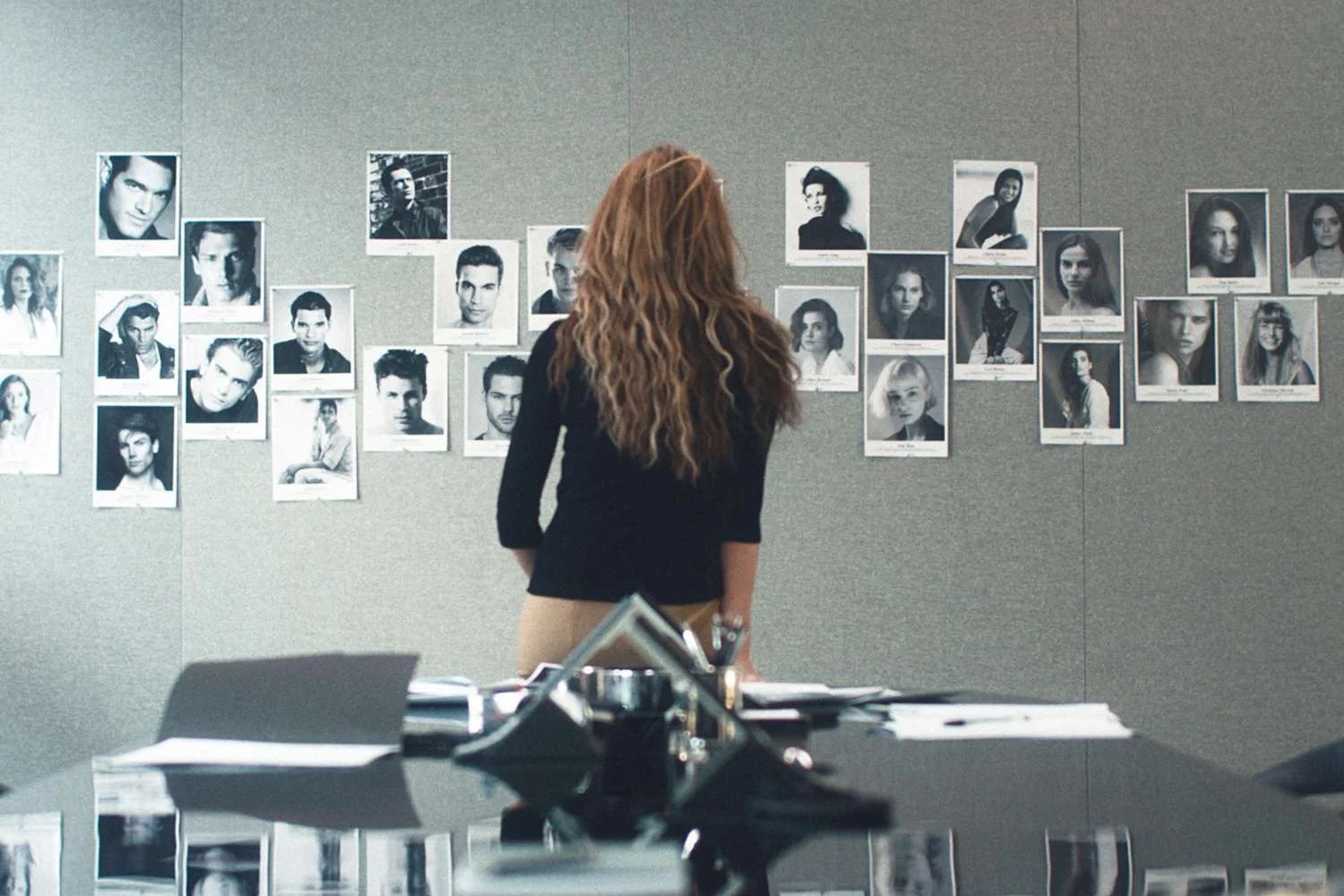
Love Story (2026)
Digital Fatigue and The Desire For Simplicity
So what is this resurgence of ‘90s simplicity a reaction to? Signs can point to a number of causes such as the political and economic state of the world, and the increasing technological advances such as AI. As a society, we are forced to look down at our phones more than ever. The number of jobs that are now synonymous with an online presence is strikingly high. We are arguably in the midst of digital fatigue. Grasping onto what seems familiar and reliable may be just what we are looking for.
In times of instability and uncertainty, the past acts as a refuge. In the language of fashion, the function is the same. Outfit repeating brings a sense of stability; it's also a signal of discernment in what we like. When something works for us, it’s only natural to continue the pattern. In this sense, repetition becomes more than habit; it becomes an assertion of control. At a time when trends circulate constantly and digital platforms accelerate their visibility, relying on a smaller selection of clothes and repeating outfits can feel like a resistance to trend culture.
Wes Anderson & Nostalgia
This is when nostalgia illustrates deeper functions. Film director Wes Anderson has a visual language of filmmaking that induces a dream-like state of nostalgia and whimsy. Symmetrical film frames and soft colours that act as their own cinematic language, which Anderson is known for. In Andrew Eckholm’s article on Wes Anderson in connection to the feeling of nostalgia, “The Art of Nostalgia,” Eckhold writes: “Just as nostalgia has a potentially therapeutic function during personal crisis, it can flip, in moments of social and political crisis, from being a conservative force to a revolutionary one. Because the present is up for grabs, the past is too, and we disguise our forward-looking aspirations in historical garb.” (Eckhold 2026) Eckhold describes the cultural fixation of nostalgia leading to two opposing outcomes. In terms of creativity, people can either use the past as an inspiration for the future or a justification for what they want to happen next.
Much like the current fixation of ‘90s fashion, the idea of constructed nostalgia is present in the inner workings of Wes Anderson’s films. The reconstruction of the past, into something aesthetic and reassuring. Anderson is an expert at emulating a familiar comfort that audiences instinctively recognise as comforting. Eckhold elaborates on this point by explaining the trademarked style of Anderson: “...the stylization that makes Anderson’s work immediately recognizable is diegetic. The elaborate interiors and perfectly symmetrical mise-en-scènes—which reflect the protagonists’ neurotic attachment to childhood or some imagined past—contrast with glimpses of real life, such as the New York streetscape in The Royal Tenenbaums. The plots reconcile fantasy and reality, past and present, by staging a collision between them, and at last the characters are forced to grow up.” (Eckhold 2026) What makes this relevant to fashion nostalgia is that Anderson’s worlds do not always recreate history accurately; they stylize memory so it becomes emotionally legible. That same process is visible in contemporary fashion culture, where the ’90s are often remembered not through complexity, but through carefully selected images that suggest calm composition with aesthetic certainty.
Nostalgia rarely restores the past exactly as our minds wish to remember it. It perhaps instead, translates into something more coherent and digestible. A comfort that can be indulged. In fashion, this process becomes visibly apparent. The revival of ‘90s minimalism, with a focus on Carolyn Bessette-Kennedy, reveals less about the past and more about the present moment. What arguably materialised as a reaction to excess has been reframed as a blueprint for timeless taste.
What emerged in the 1990s as a response to excess now returns under new language — “quiet luxury,” timelessness, refinement — yet much of its original context is stripped away. The risk of nostalgia is that repeated images eventually flatten the individuality that made them compelling in the first place. Clothes can be reproduced with ease, but the conditions that gave them meaning cannot. Carolyn’s wardrobe continues to resonate not because it offers a formula, but because it belonged so completely to a person whose presence was inimitable.
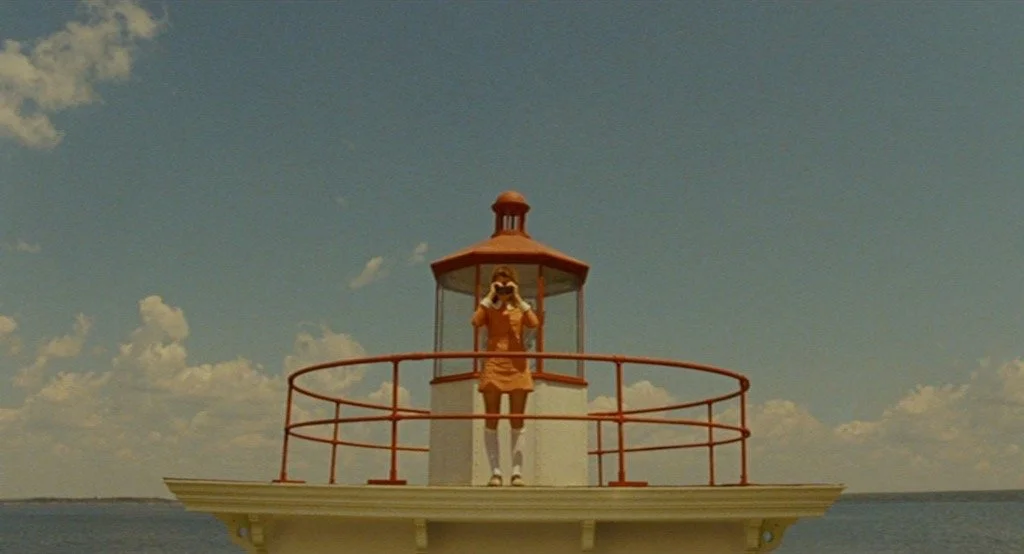
Moonrise Kingdom (2012)
Publication in mind: Vogue US
